




Newest Courses

Performance Management System
Performance Management System Course
Overview
This course provides a practical understanding of the Performance Management Module, covering the end-to-end process of setting up and managing goal-setting, review cycles, and employee evaluations. It enables users to configure templates, define Goals, Key Results, Skills and competencies, assign reviewers, and conduct assessments in line with organizational policies. Learners will also explore advanced features like mid-term reviews and normalization, for transparent and data-driven evaluations.
Course Objectives
By the end of the course, learners will be able to:
• Configure performance templates, parameters,
and goal categories as per organizational norms.
• Define and manage performance cycles and reviewer hierarchies.
• Link organizational goals with departmental and individual objectives.
• Conduct evaluations, capture ratings, and manage feedback effectively.
• Integrate performance scores with payroll, increments, and promotions.
Course Content
- Performance template creation (Goals, Key Results, Milestones, Competencies and Skills parameters)
- Review cycle setup and scheduling
- Goal category and weightage configuration
- Employee and reviewer assignment process
- Self-assessment and manager review workflows
- Rating scales and comment settings
- Mid-term and final review management
- Normalization and bell curve processing
- Performance result approval and closure

Service and Maintenance
Service and Maintenance Course
Overview
The Service and Maintenance module ensures the optimal performance, reliability, and longevity of equipment and systems through planned and efficient management. It tracks service schedules, maintenance activities, and equipment history to minimize downtime and enhance productivity. The module enables effective deployment of technicians, tools, and spare parts for timely service delivery. It supports both preventive and corrective maintenance operations, improving asset utilization and reducing operational costs. By providing real-time insights and reporting, it helps organizations maintain high service quality and customer satisfaction.
Course Objectives
- It helps to plan and automate routine maintenance activities to prevent equipment breakdowns and prolong asset life.
- It enables the recording, tracking, and resolution of customer service requests or internal maintenance tasks in an organized way.
- It Minimize unexpected equipment failures by ensuring timely maintenance, which keeps operations smooth.
- Document all maintenance activities accurately to track equipment performance and maintenance effectiveness.
- Optimize spare parts inventory to balance availability with carrying costs and avoid delays in repairs.
Course Content
Master Data Setup which includes the following:
- Product Master setup
- Customer Master setup
- Warehouse setup
- Service and Maintenance setup
- Resource setup
- Task Group setup
- Equipment setup
Process Flows Includes:
- Field Service Flow
- Plant Maintenance Flow
Widgets

Plant Maintenance
Plant Maintenance - Configuration
Overview
This course provides a comprehensive introduction to the foundational configuration of Plant Maintenance (PM) in Feeld.ai. It is designed to help participants understand how to set up core elements such as roles, users, document types, and transaction sequences, ensuring efficient and standardized maintenance operations within the system.
Course Objectives
- Understand the end-to-end setup process for Plant Maintenance in Feeld.ai.
- Configure roles and user access specific to PM activities.
- Define and manage document types, transaction sequences, and workflows for maintenance processes.
- Set up and maintain the Document Management System (DMS) to support plant maintenance documentation.
Course Content
- Introduction to PM Configuration in Feeld.ai
- Key concepts and system architecture
- Core elements of PM setup
- Roles and User Configuration
- Defining roles and authorization levels
- Assigning users to PM-specific roles
- Access control and security considerations
- Configuration of Document Types & Transaction Sequences
- Creating and customizing document types
- Setting up transaction flows for maintenance activities
- Document Management System (DMS) Integration
- Overview of DMS in Feeld.ai
- Linking documents to PM transactions
- Practical Exercises & Case Studies
- Hands-on configuration scenarios
- Real-world use cases for Plant Maintenance setup

Application Dictionary
Application Dictionary Course
Overview
This course introduces the core components of the Onfinity ERP framework, enabling participants to configure tables, workflows, dashboards, and UI elements like Screen Composer, Mosaic Library, different types of Dashboard and widgets equipping them to efficiently build and customize business applications.
Course Objectives
- Understand Onfinity’s application framework and metadata structure
- Configure tables, columns, and create application windows
- Design UI using Screen Composer and Onfinity Canvas
- Customize layouts with header panels, card views
- Implement checklists for task tracking and user guidance
- Manage preferences, alerts, workflows
- Build dashboards using charts, KPIs, and widgets
- Personalize landing pages and dashboard views
- Define translations, and audit logs
- Organize functionality through module management
- Deploy configured modules and features into production environment
Course Content
- Understand the core application framework and structure
- Configure references, table tabs, and column settings
- Navigate and design screen and field tab layouts, tree tab views
- Build interface layouts using header panel component
- Create dynamic cards using the card view layout
- Build responsive screens using Screen Composer functionality
- Implement guided processes using checklist components
- Manage user preferences apply themes
- Design dashboards and landing page based on user requirements
- Manage changes through audits changes
- Manage Version through maintain Version
- Handle multi-language translations
- Manage Modules using Module Management
Mosaic
Mosaic Course
Overview
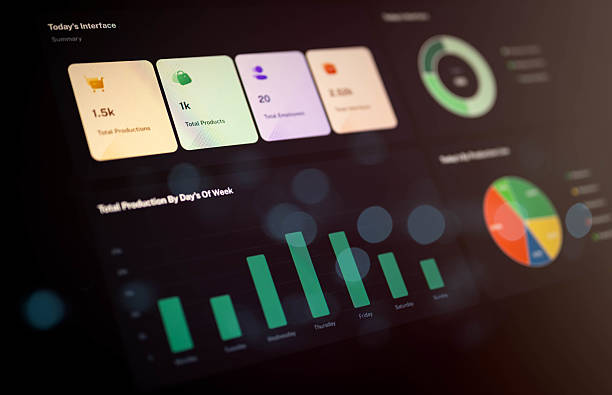
The Mosaic feature integrates multiple interactive widgets within a single interface. These widgets enable users to access specific information, view live data, use shortcuts, and perform simple tasks, making the interface more dynamic,engaging, and user-friendly. Furthermore, the widgets are configurable, allowing users to customize their layout and behavior including moving, resizing, and editing content — or even create new widgets as per their requirements, ensuring a truly personalized and flexible experience.
Course Objectives
- To understand the functionality of the Dynamic widget in Onfinity system.
- Widgets should provide users with convenient and easy to access features or information that improve overall usability on a application or device
- Widgets often aim to deliver real – time updates.
- Widgets can be designed to allow users to interact with content directly, such as submitting forms, clicking buttons, or customizing settings.
- Widgets goal is to streamline specific tasks, making them quicker and more efficient, such as providing quick access to data or functions.
Course Content
- Mosaic Library
- Widget Types
- Dynamic Widget
- Widget on Homepage
- Dynamic Widget on landing page
- Show Advanced search on Dynamic widget


Plant Maintenance
Plant Maintenance- Basic
Overview
This course covers Plant Maintenance (PM) in Feeld.ai, guiding users through setting up maintenance requests, planning work orders, managing tasks, and using the mobile app for execution. Participants will learn how to streamline maintenance activities, ensure equipment reliability, and support end-to-end maintenance processes.
Course Objectives
- Learn the Plant Maintenance process flow in Feeld.ai.
- Understand how to create and manage maintenance requests and work orders.
- Learn to define and manage tasks, checklists, and resource allocations.
- Get familiar with scheduling, dispatching, and tracking maintenance activities.
- Explore task execution, confirmation, and closure using the mobile app.
- Understand how to record costs, generate reports, and integrate with asset management.
Course Content
- Introduction to Plant Maintenance in Feeld.ai
- Overview of PM lifecycle
- Role of PM in asset reliability and uptime
- Creating Maintenance Requests & Work Orders
- Logging service requests
- Converting service requests to work orders
- Work order structure and priorities
- Tasks, Checklists & Resource Planning
- Defining maintenance tasks
- Creating and managing checklists
- Assigning technicians, tools, and spare parts
- Scheduling & Dispatching Work
- Work order Task scheduling
- Dispatching tasks to technicians
- Tracking progress and technician status
- Mobile App for Execution & Confirmation
- Executing tasks in the mobile app
- Recording time, materials, and checklists
- Capturing photos & notes

Plant Maintenance
Plant Maintenance – Configuration
Overview
This course provides a comprehensive introduction to the foundational configuration of Plant Maintenance (PM) in Feeld.ai. It is designed to help participants understand how to set up core elements such as roles, users, document types, and transaction sequences, ensuring efficient and standardized maintenance operations within the system.
Course Objectives
- Understand the end-to-end setup process for Plant Maintenance in Feeld.ai.
- Configure roles and user access specific to PM activities.
- Define and manage document types, transaction sequences, and workflows for maintenance processes.
- Set up and maintain the Document Management System (DMS) to support plant maintenance documentation.
Course Content
- Introduction to PM Configuration in Feeld.ai
- Key concepts and system architecture
- Core elements of PM setup
- Roles and User Configuration
- Defining roles and authorization levels
- Assigning users to PM-specific roles
- Access control and security considerations
- Configuration of Document Types & Transaction Sequences
- Creating and customizing document types
- Setting up transaction flows for maintenance activities
- Document Management System (DMS) Integration
- Overview of DMS in Feeld.ai
- Linking documents to PM transactions
- Practical Exercises & Case Studies
- Hands-on configuration scenarios
- Real-world use cases for Plant Maintenance setup

Performance Management System
Performance Management System Pre-Sales
Overview
The Performance Management System in Onfinity is designed to help organizations efficiently manage and track employee goals, milestones, and appraisals. This course provides a detailed walkthrough of how users can utilize Onfinity’s goal tracker, dashboards, My Actions section, and appraisal integration features. Through this session, learners will understand how to create, assign, review, and evaluate performance goals in alignment with organizational objectives.
The system emphasizes transparency, collaboration, and real-time progress tracking, enabling both employees and reviewers to stay connected through direct messaging and comments. Participants will gain hands-on experience navigating Onfinity’s key modules — from goal creation to final appraisal reports.
Course Objectives
- Understand the structure and functionality of the Onfinity Performance Management System.
- Navigate the dashboard to access goal trackers and performance views.
- Create and assign individual, departmental, and organizational goals with defined priorities and timelines.
- Configure and manage key results and milestones for measurable performance tracking.
- Use the My Actions section to update progress, upload documents, and communicate in real-time.
- Review and evaluate employee performance as a reviewer using the Reviewer View.
- Integrate goals with appraisal plans, including skills and competency mapping.
- Generate and interpret performance appraisal reports within Onfinity.
Course Content
- Overview of the system and dashboard navigation.
- Using Reviewee and Reviewer views to track and manage milestones.
- Viewing and filtering individual, departmental, and organizational goals.
- Steps to create, assign, and prioritize goals.
- Setting key results, measure types, and generating milestones.
- Adding comments, messaging, and sharing documents.
- Linking goals to appraisal plans and managing evaluations.
- Hands-on demonstration of the entire performance cycle.

Performance Management System
Performance Management
Overview
This course provides a practical understanding of the Performance Management Module, covering the end-to-end process of setting up and managing goal-setting, review cycles, and employee evaluations. It enables users to configure templates, define Goals, Key Results, Skills and competencies, assign reviewers, and conduct assessments in line with organizational policies. Learners will also explore advanced features like mid-term reviews and normalization, for transparent and data-driven evaluations.
Course Objectives
By the end of the course, learners will be able to:
•
Configure performance templates, parameters, and goal categories as per
organizational norms.
• Define
and manage performance cycles and reviewer hierarchies.
• Link
organizational goals with departmental and individual objectives.
•
Conduct evaluations, capture ratings, and manage feedback effectively.
•
Integrate performance scores with payroll, increments, and promotions.
Course Content
• Performance template creation (Goals, Key Results, Milestones,
Competencies and Skills parameters)
• Review
cycle setup and scheduling
• Goal
category and weightage configuration
•
Employee and reviewer assignment process
•
Self-assessment and manager review workflows
• Rating
scales and comment settings
•
Mid-term and final review management
•
Normalization and bell curve processing
•
Performance result approval and closure